Everyone Makes Mistakes, The Important Thing Is How You Fix Them
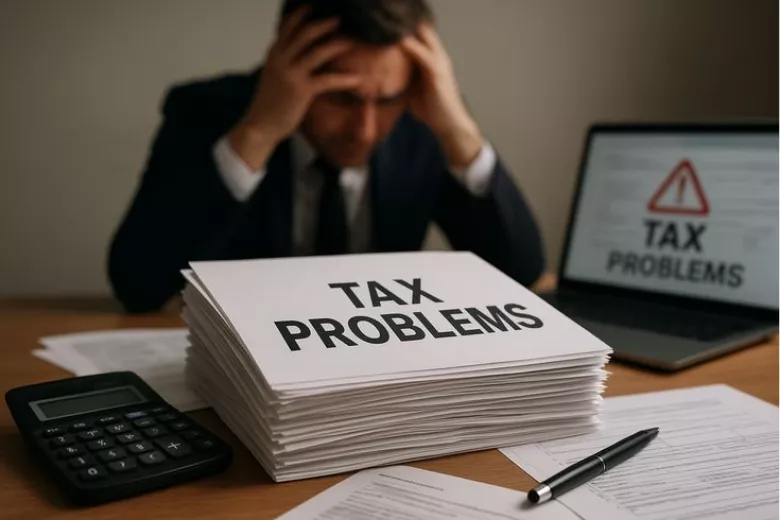
No taxpayer sets out to make mistakes deliberately. Whether it’s an individual forgetting to declare additional income, a business claiming expenses incorrectly, or a company discovering historical VAT errors during a financial review, tax mistakes happen more often than many people realise.
The challenge is that these mistakes rarely disappear over time. As SARS continues investing in sophisticated data matching, third-party reporting, and digital verification systems, undisclosed tax issues are becoming increasingly easier to detect. What may have gone unnoticed years ago could now trigger an audit, verification request, or additional assessment.
Fortunately, South African tax legislation provides taxpayers with an opportunity to voluntarily correct historical errors before SARS identifies them. This opportunity is known as the SARS Voluntary Disclosure Programme (VDP).
The programme is designed to encourage honest taxpayers to come forward, disclose previous defaults, and regularise their tax affairs while potentially avoiding severe penalties and criminal prosecution.
Understanding how the SARS voluntary disclosure programme works can make the difference between resolving a tax problem professionally or facing significant financial and legal consequences.
Why Voluntary Disclosure Can Protect You
Many taxpayers incorrectly believe that once a mistake has been made, they have no choice but to wait and hope SARS never discovers it.
This approach carries enormous risk.
SARS has access to information from numerous sources, including:
- Banks
- Employers
- Financial institutions
- Investment providers
- Medical schemes
- Property transactions
- International information-sharing agreements
- Third-party reporting systems
As technology improves, the chances of historical tax mistakes remaining hidden continue to decrease.
Making a voluntary disclosure before SARS contacts you demonstrates good faith and may significantly improve the outcome.
What Is the SARS Voluntary Disclosure Programme?
The Voluntary Disclosure Programme is a legal process established under the Tax Administration Act.
It allows taxpayers to disclose previous tax defaults to SARS before those defaults are detected through an audit or investigation.
The programme is available for various tax types, including:
- Income Tax
- VAT
- PAYE
- Capital Gains Tax
- Donations Tax
- Estate Duty
- Other taxes administered by SARS
Rather than punishing taxpayers who proactively disclose mistakes, SARS encourages voluntary compliance through reduced penalties under qualifying circumstances.
What Counts as a Tax Default?
A tax default refers to any situation where a taxpayer has not fully complied with South African tax legislation.
Examples include:
- Under-declared income
- Unreported foreign income
- Incorrect VAT claims
- PAYE calculation errors
- Failure to register for tax when required
- Incorrect expense deductions
- Failure to submit tax returns
- Historical accounting mistakes
- Capital gains omitted from returns
Some defaults occur accidentally through misunderstanding, while others arise because businesses grow rapidly and compliance fails to keep pace.
Regardless of the reason, voluntary disclosure allows taxpayers to correct these issues before SARS identifies them independently.
Who Qualifies for the Voluntary Disclosure Programme?
Not every taxpayer automatically qualifies.
Generally, disclosures should:
- Be voluntary
- Be complete and accurate
- Relate to a genuine tax default
- Be submitted before SARS begins an audit into the specific issue
- Contain full supporting information
If SARS has already notified a taxpayer of an audit relating to the same matter, the disclosure may no longer qualify.
This is one of the reasons why acting early is so important.
Common Situations Where Businesses Use Voluntary Disclosure
Many businesses assume voluntary disclosure is only for serious tax fraud.
In reality, it is commonly used for genuine mistakes discovered during routine financial reviews.
Examples include:
Historical VAT Errors
Businesses sometimes discover:
- Incorrect VAT calculations
- Invalid input VAT claims
- Unrecorded taxable supplies
Correcting these through voluntary disclosure may reduce future exposure.
Payroll Mistakes
Errors involving PAYE, UIF or employee benefits may continue unnoticed for years.
Rather than waiting for a payroll audit, businesses often use the VDP to correct these issues.
Undeclared Income
Income may be omitted due to:
- Poor record keeping
- Overseas investments
- Rental income
- Additional consulting income
Declaring it voluntarily generally produces a better outcome than waiting for SARS to identify it.
Incorrect Expense Claims
Businesses sometimes discover deductions that should never have been claimed.
Correcting these voluntarily demonstrates compliance and transparency.
Benefits of Making a Voluntary Disclosure
The programme exists because SARS recognises that encouraging voluntary compliance benefits both taxpayers and the tax system.
Potential advantages include:
Reduced Penalties
Qualifying taxpayers may receive relief from certain understatement penalties.
This can represent significant financial savings.
Reduced Legal Risk
Voluntary disclosure may protect taxpayers from criminal prosecution relating to disclosed defaults.
Greater Certainty
Rather than living with uncertainty, taxpayers can regularise their affairs and move forward confidently.
Improved Business Credibility
Businesses with clean tax records are better positioned when applying for:
- Finance
- Investment
- Tenders
- Tax Compliance Status PINs
Maintaining compliance supports long-term commercial success.
The Voluntary Disclosure Process
Although every case differs, the process generally follows several stages.
Step 1: Review the Tax Position
Identify:
- The nature of the default
- The tax periods involved
- The estimated financial impact
A comprehensive review prevents incomplete disclosures.
Step 2: Gather Supporting Documentation
This may include:
- Financial statements
- Tax returns
- Bank statements
- Accounting records
- Payroll reports
- VAT schedules
Accurate documentation strengthens the application.
Step 3: Prepare the Disclosure
The disclosure should clearly explain:
- What happened
- Why it occurred
- Which taxes were affected
- How the amounts were calculated
Transparency is essential.
Step 4: Submit the Application
The application is submitted to SARS for consideration.
Further information may be requested before SARS reaches a decision.
Common Mistakes That Prevent Successful Applications
Although the Voluntary Disclosure Programme offers significant benefits, applications are not automatically approved. Many taxpayers weaken their applications by making avoidable mistakes.
Waiting Too Long
One of the biggest mistakes is delaying action after discovering a tax error.
Some businesses believe they should first “see if SARS notices.” Unfortunately, if SARS starts an audit or investigation before a voluntary disclosure is submitted, the opportunity to use the programme for that specific default may be lost.
Early action is almost always the best approach.
Submitting Incomplete Information
SARS expects applicants to make a full and honest disclosure.
Leaving out relevant information, understating the tax liability, or failing to provide supporting documentation can delay the process or result in the application being rejected.
Complete transparency is essential.
Estimating Figures Without Supporting Evidence
Businesses sometimes attempt to estimate historical amounts without reviewing accounting records properly.
Whenever possible, disclosures should be supported by:
- Financial statements
- Bank records
- Tax returns
- Invoices
- Payroll information
- VAT schedules
- Contracts and supporting agreements
Accurate documentation demonstrates credibility.
Treating Every Error the Same
Different tax defaults require different approaches.
For example:
- An undeclared capital gain requires different supporting documentation from a VAT error.
- Payroll corrections differ significantly from omitted income.
Understanding the specific tax legislation involved is important when preparing a disclosure.
How Businesses Can Reduce the Need for Future Disclosures
While the Voluntary Disclosure Programme provides an opportunity to correct historical mistakes, every business should aim to minimise future compliance risks.
Some practical strategies include:
Conduct Regular Tax Reviews
Periodic reviews help identify issues before they develop into larger problems.
A proactive review can uncover:
- VAT discrepancies
- Payroll inconsistencies
- Incorrect tax treatments
- Missing documentation
Early identification makes correction significantly easier.
Maintain Accurate Financial Records
Good accounting records remain the foundation of tax compliance.
Businesses should ensure:
- Transactions are recorded accurately.
- Supporting documentation is retained.
- Reconciliations are performed regularly.
- Financial information agrees with tax submissions.
Accurate records simplify future compliance and reduce audit risk.
Stay Up to Date with Legislative Changes
South African tax legislation evolves regularly.
Businesses that fail to keep up with legislative amendments may unintentionally become non-compliant.
Professional tax advice helps ensure new requirements are identified and implemented promptly.
Seek Advice Before Complex Transactions
Major business decisions often carry tax consequences.
Examples include:
- Business restructures
- Property purchases
- Foreign investments
- Business acquisitions
- Shareholder changes
Obtaining advice before these transactions occur is generally more cost-effective than correcting problems afterwards.
Why Professional Guidance Makes a Difference
Although taxpayers can apply for voluntary disclosure themselves, many applications involve complex tax calculations and supporting legislation.
Professional assistance helps ensure:
- The correct defaults are identified.
- Calculations are accurate.
- Supporting documentation is complete.
- Communication with SARS is managed professionally.
- The application is presented clearly and comprehensively.
This reduces delays and improves the likelihood of a successful outcome.
How CTV Helps Clients Through the Voluntary Disclosure Process
CTV assists both individuals and businesses in resolving historical tax issues with confidence.
Our services include:
- Comprehensive reviews of historical tax affairs
- Identification of undisclosed tax risks
- Preparation of Voluntary Disclosure applications
- Supporting calculations and documentation
- Engagement with SARS throughout the process
- Advice on maintaining future compliance
Our goal is not simply to resolve historical problems but to help clients establish stronger tax compliance systems for the future.
Don’t Wait for SARS to Find the Problem
Many taxpayers only seek professional advice after receiving an audit notification or verification request.
By that stage, some options may no longer be available.
Voluntary disclosure offers taxpayers an opportunity to take control before SARS takes action.
Addressing historical tax issues early can reduce uncertainty, improve compliance, and allow businesses to focus on growth rather than unresolved tax risks.
Conclusion
Tax mistakes do not have to define your future relationship with SARS. Whether the issue involves undeclared income, VAT errors, payroll discrepancies, or incorrect deductions, addressing the problem voluntarily is often the most effective way to restore compliance.
The SARS Voluntary Disclosure Programme provides a structured pathway for taxpayers to correct historical defaults before SARS uncovers them independently. Acting early, preparing accurate documentation, and seeking professional guidance can significantly improve the outcome.
If you believe your business or personal tax affairs contain historical errors, now is the time to act, not after receiving a SARS notification.
Contact CTV today for confidential advice on the SARS Voluntary Disclosure Programme and let our experienced team help you correct tax mistakes with confidence before they become much bigger problems.